Buying rural land can feel out of reach—especially when traditional lenders require large down payments and stricter terms. That’s where USDA Rural Development loans stand out. Designed to support rural homeownership and development, these loans are one of the most accessible financing options for buyers looking to purchase land and build in eligible rural areas.
But are you eligible? Let’s break down how USDA loans work, who qualifies, and the pros and cons for rural land buyers.
What Is a USDA Rural Development Loan?
USDA loans are government-backed mortgages offered through approved lenders and supported by the U.S. Department of Agriculture. While they’re often associated with buying a finished home, USDA loans can also be used to purchase land and build a primary residence, making them especially appealing for homesteaders, rural families, and first-time buyers.
One of the biggest benefits? USDA loans require $0 down for qualified borrowers—a major advantage compared to conventional land or construction loans.
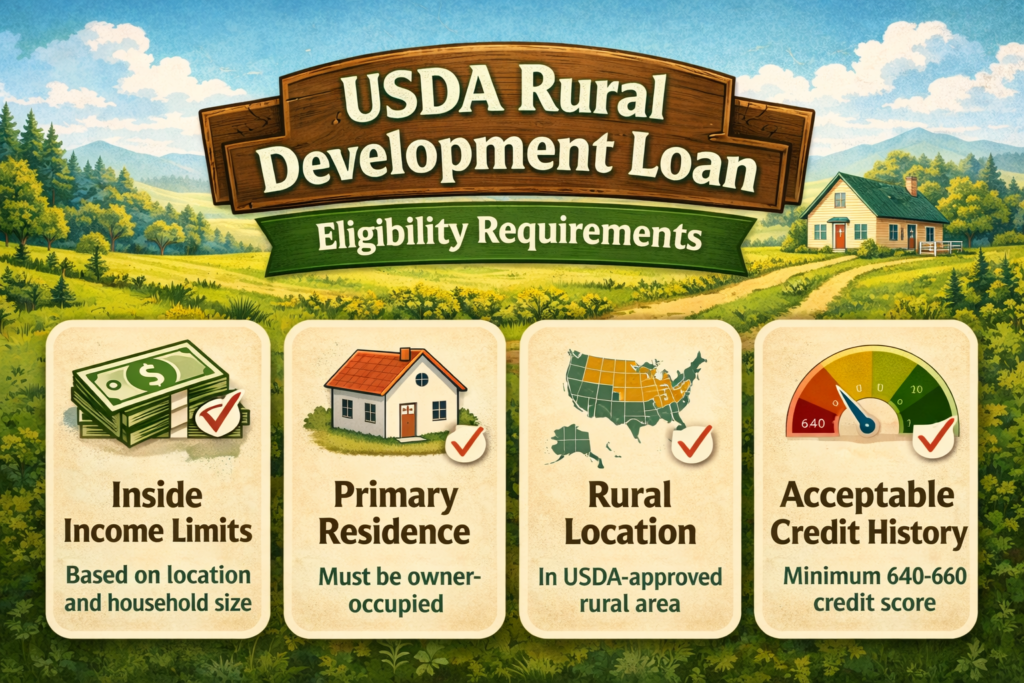
USDA Rural Development Loan Eligibility Requirements
To qualify for a USDA loan, buyers must meet several criteria:
- Location eligibility: The property must be in a USDA-designated rural area (many small towns and outskirts qualify).
- Primary residence: The home must be your full-time residence—not a vacation or investment property.
- Income limits: Household income must fall within USDA limits, which vary by region and family size.
- Credit score: Many lenders look for a minimum credit score around 640, though some allow lower with strong compensating factors.
- Debt-to-income ratio: Typically capped around 41%, though exceptions may apply.
There is no official acreage limit, but the land must be considered residential in nature—not income-producing farmland.
To find out if a property is eligible, enter the address here.
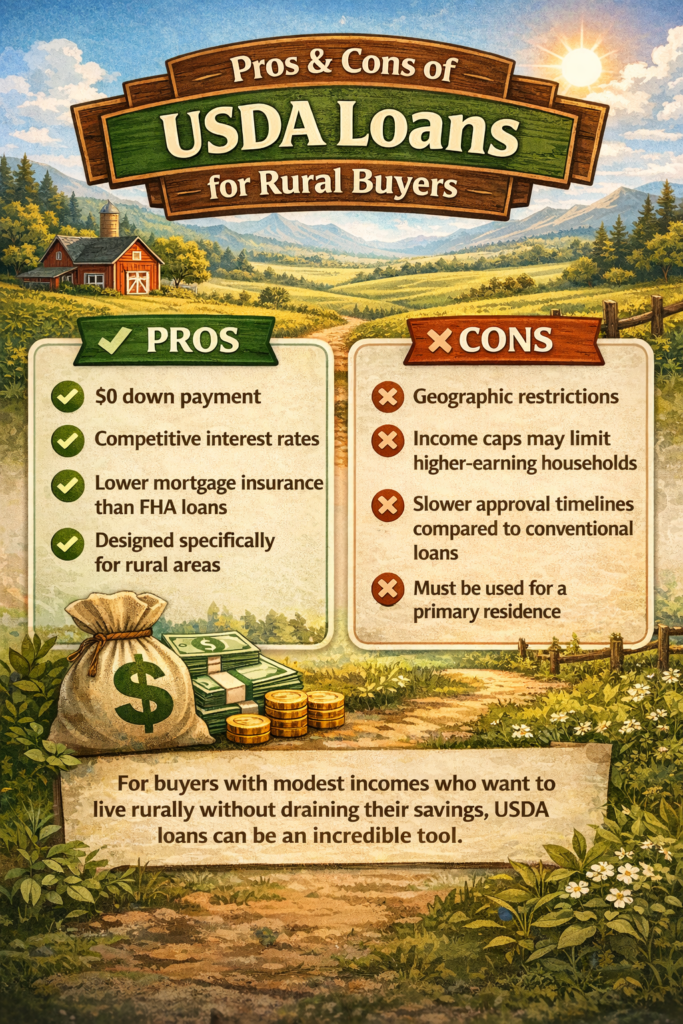
Is a USDA Loan Right for Your Rural Land Purchase?
To begin with USDA loans are best suited for buyers who plan to build a modest home, live on the property full-time, and meet the income requirements. They’re especially popular among first-time buyers, young families, and those pursuing a more self-sufficient or homestead-style lifestyle.
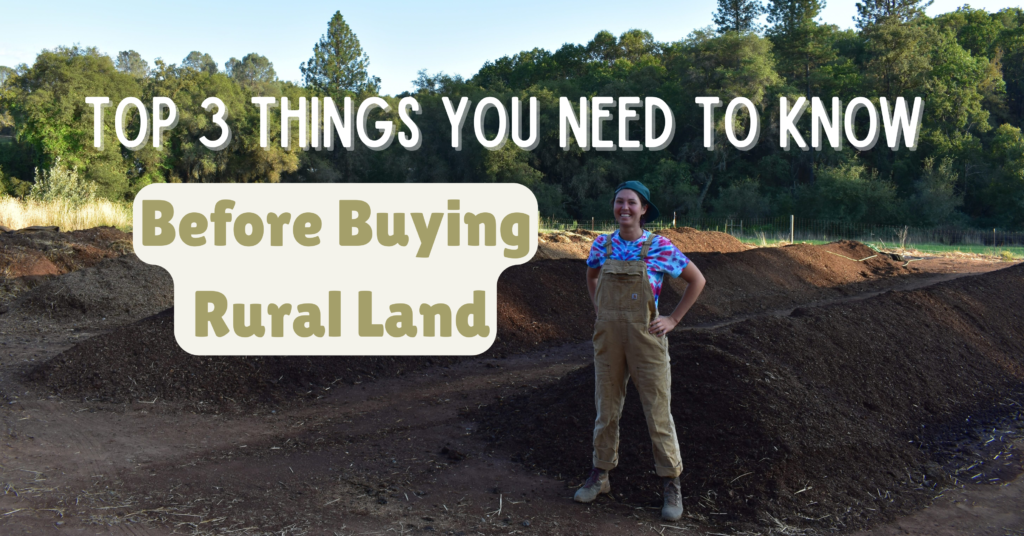
However, financing rural land can be a complex process. Zoning, utilities, access, and build plans all matter—and not every lender understands rural properties well. Read our article Top 3 Things You Need To Know Before Buying Rural Land to better understand the nuances of buying rural land.
Therefore, if you’re serious about buying rural land, it’s important to understand all your financing options, not just USDA loans.
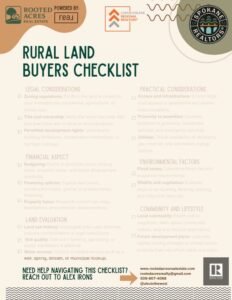
👉 Learn more about USDA loans, alternative financing, grants, and buyer checklists in our full guide: Buying Rural Land: Loans, Grants, and Programs You Need to Know.
Need help determining whether a USDA loan—or another rural financing option—is right for you? We can help you navigate the process and avoid costly mistakes before you buy. 🌱🏡